Inspiration from Building Tradition
The historic town of Hohenems is characterised by a rare continuity of Jewish, artisanal and aristocratic history, which manifests in a remarkable cultural and architectural layering. In this context, the development of the RathausQuartier, a new town hall district, marks a significant urban impetus. At the northern edge of the urban fabric, adjoining the listed historic core, a carefully structured ensemble has been created. Its placement, grain and materiality respond to the architectural context of the neighbouring Jewish quarter as well as the merchants’ and craftsmen’s houses on Marktstraße.
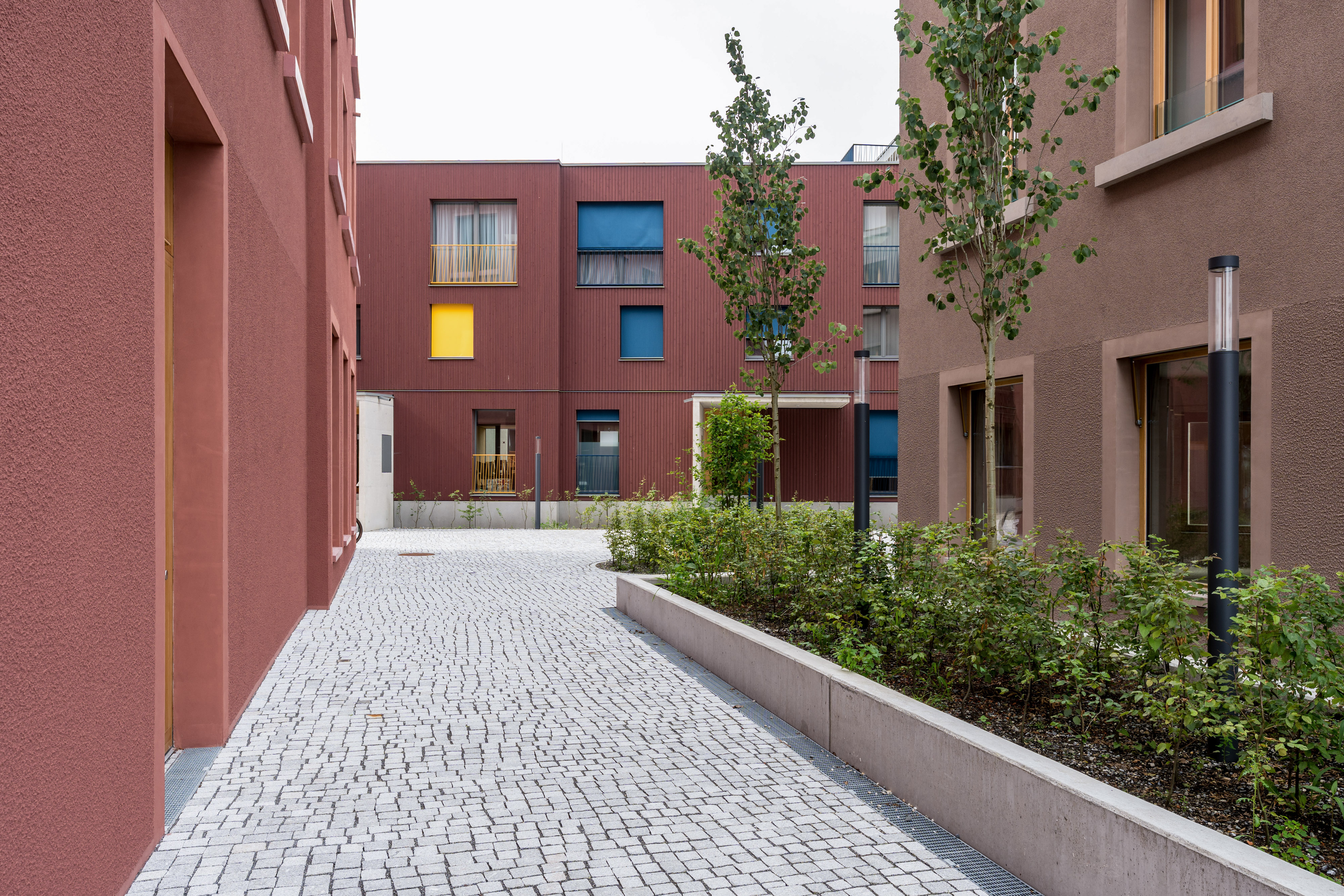
The design of the RathausQuartier is based on a finely calibrated urban composition. Six buildings are connected by a dense network of public open spaces, pedestrian routes and green structures. A key objective was the development of a car-free neighbourhood with high-quality outdoor spaces, underpinned by a generously proportioned underground car park with two basement levels. The urban layout integrates a mix of uses within a clearly structured and functionally coherent framework. In addition to citizen-oriented services in the newly constructed town hall, as well as restaurants and shops, carefully designed living and working spaces have been created.
Read more
The listed Villa Iwan and Franziska Rosenthal forms the iconic centrepiece of the complex. Following a sensitive revitalisation, it now serves as the Literaturhaus Vorarlberg, establishing a cultural anchor within the quarter, while the historic bowling alley has been transformed into a charming café. The walled garden, which has been in private use for more than 135 years, is now accessible to the public for the first time and has been reinterpreted as an urban oasis.
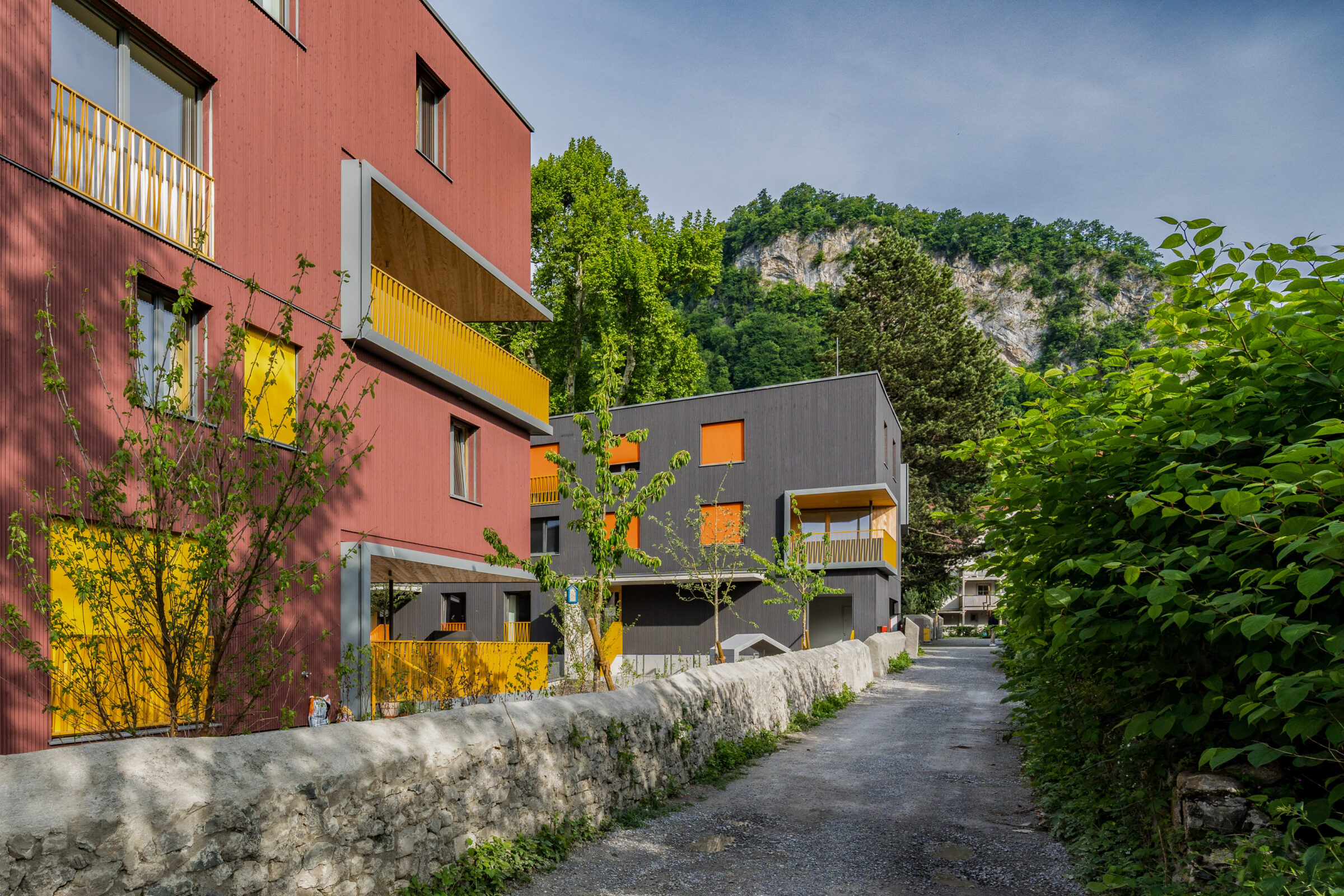
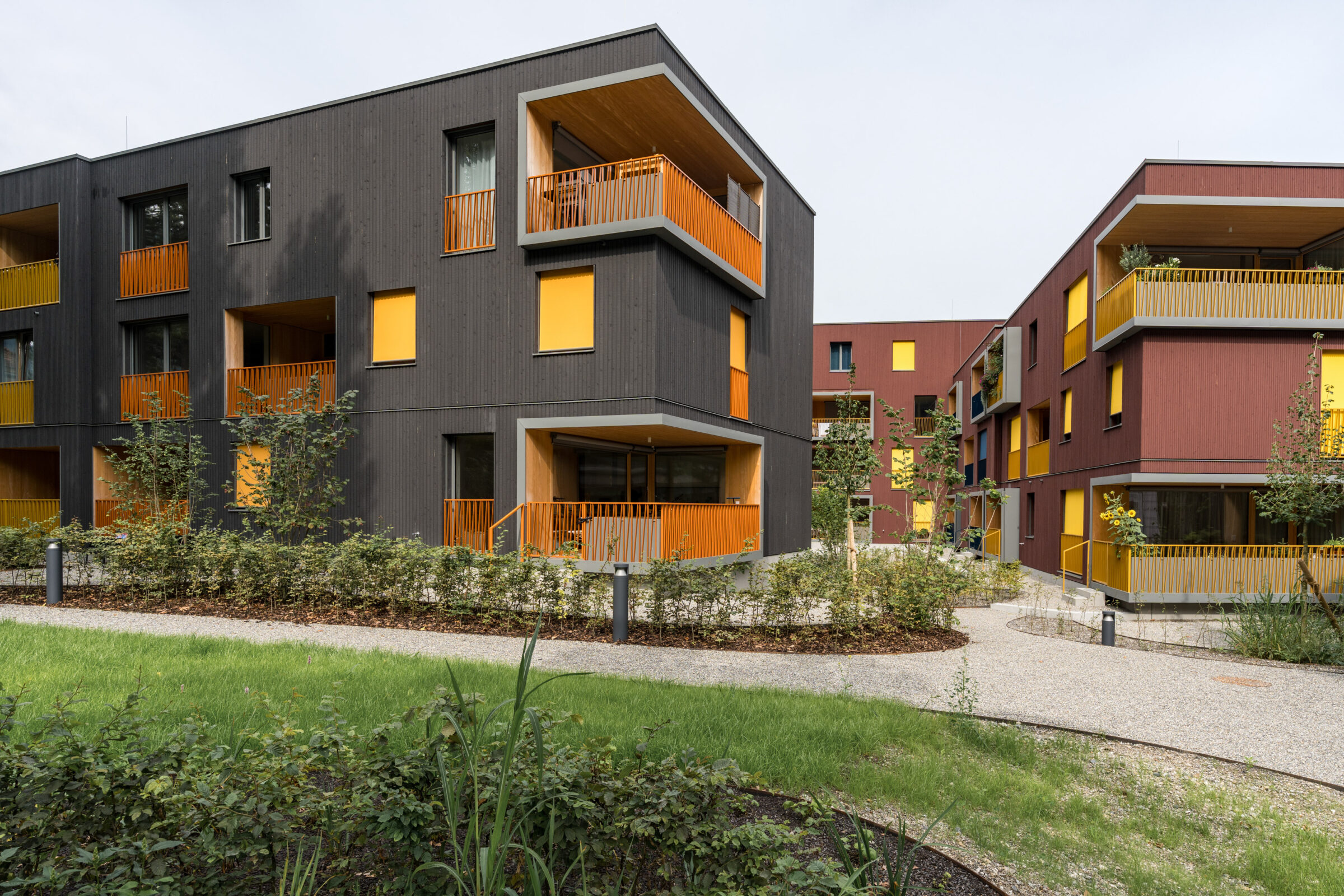
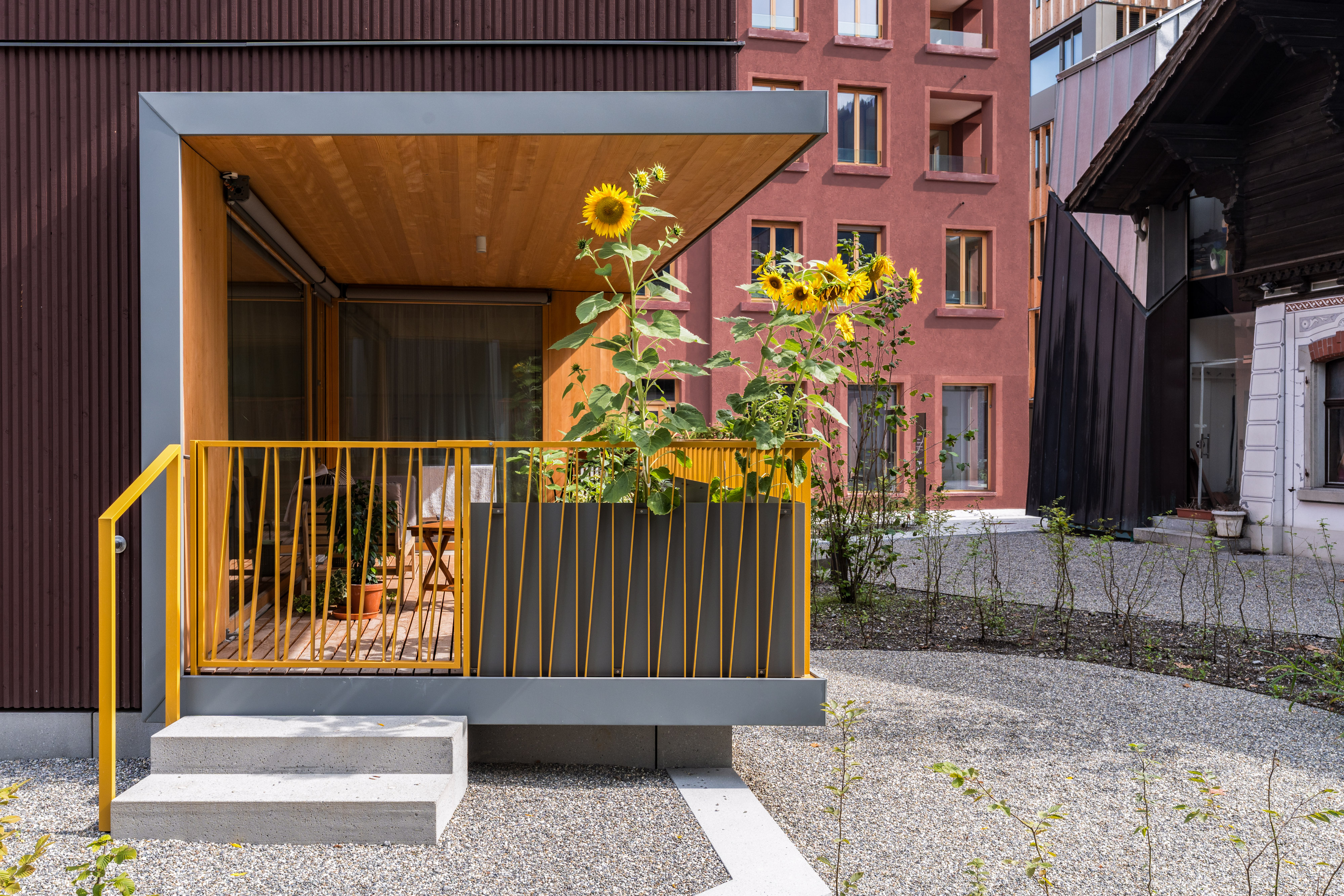
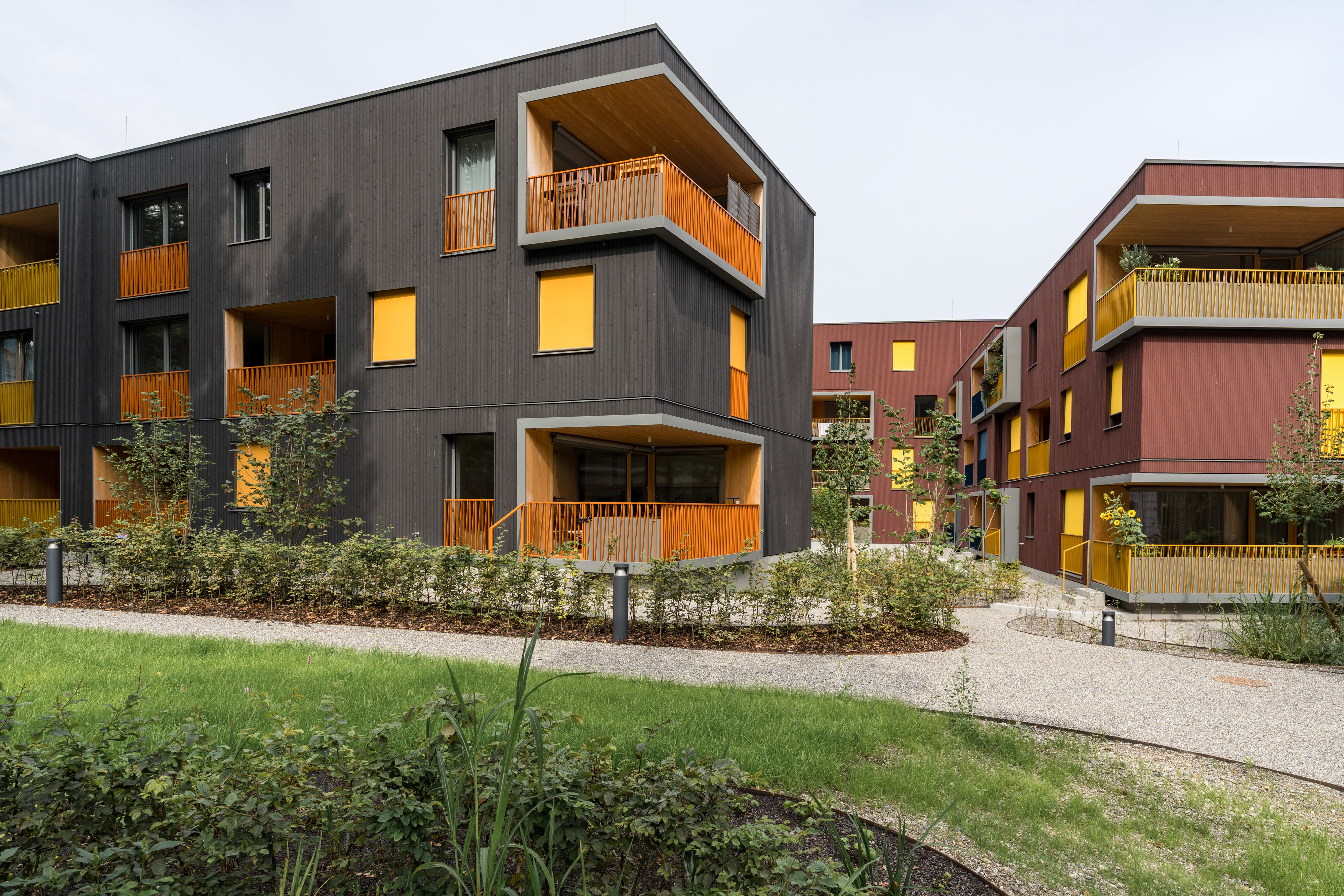
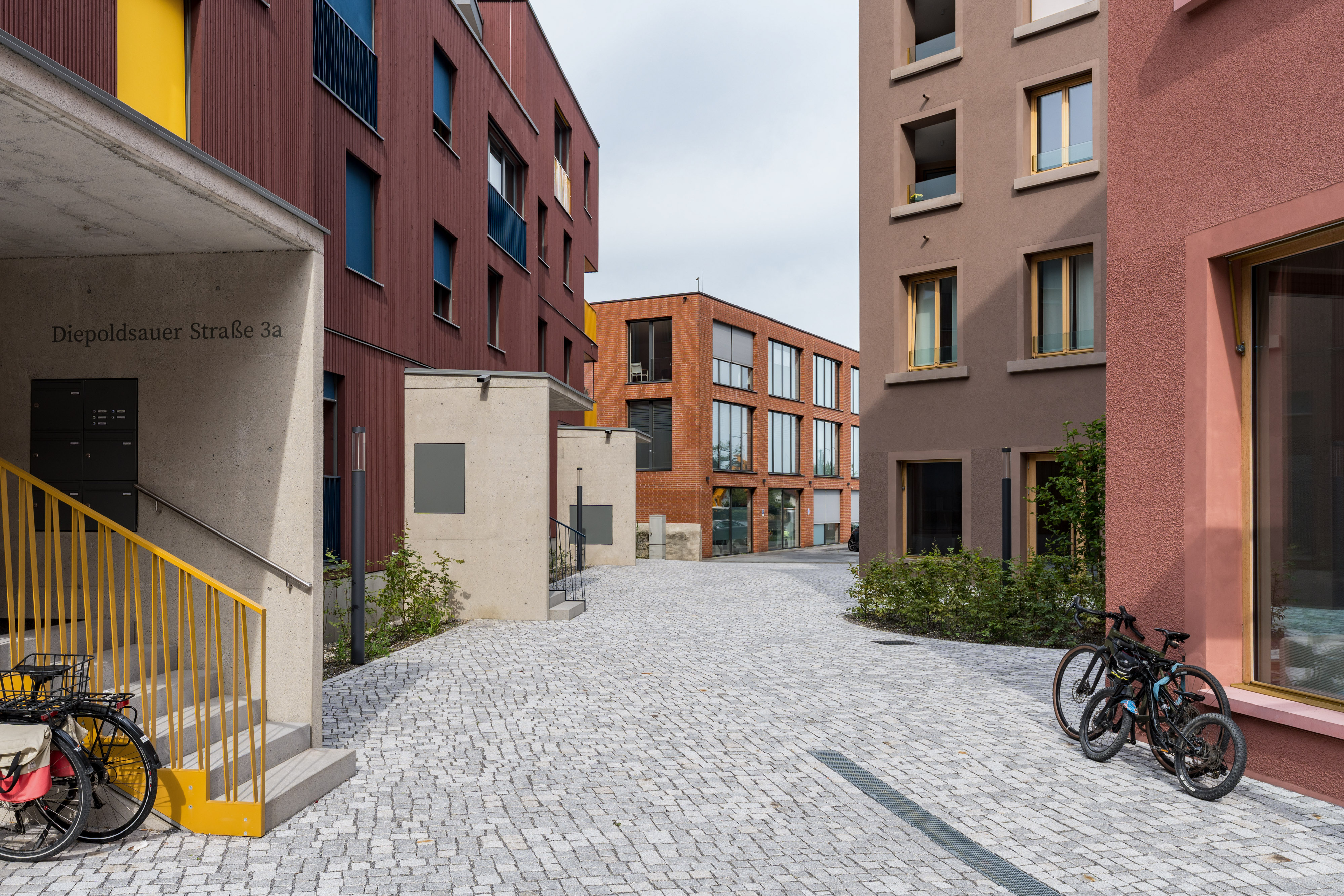
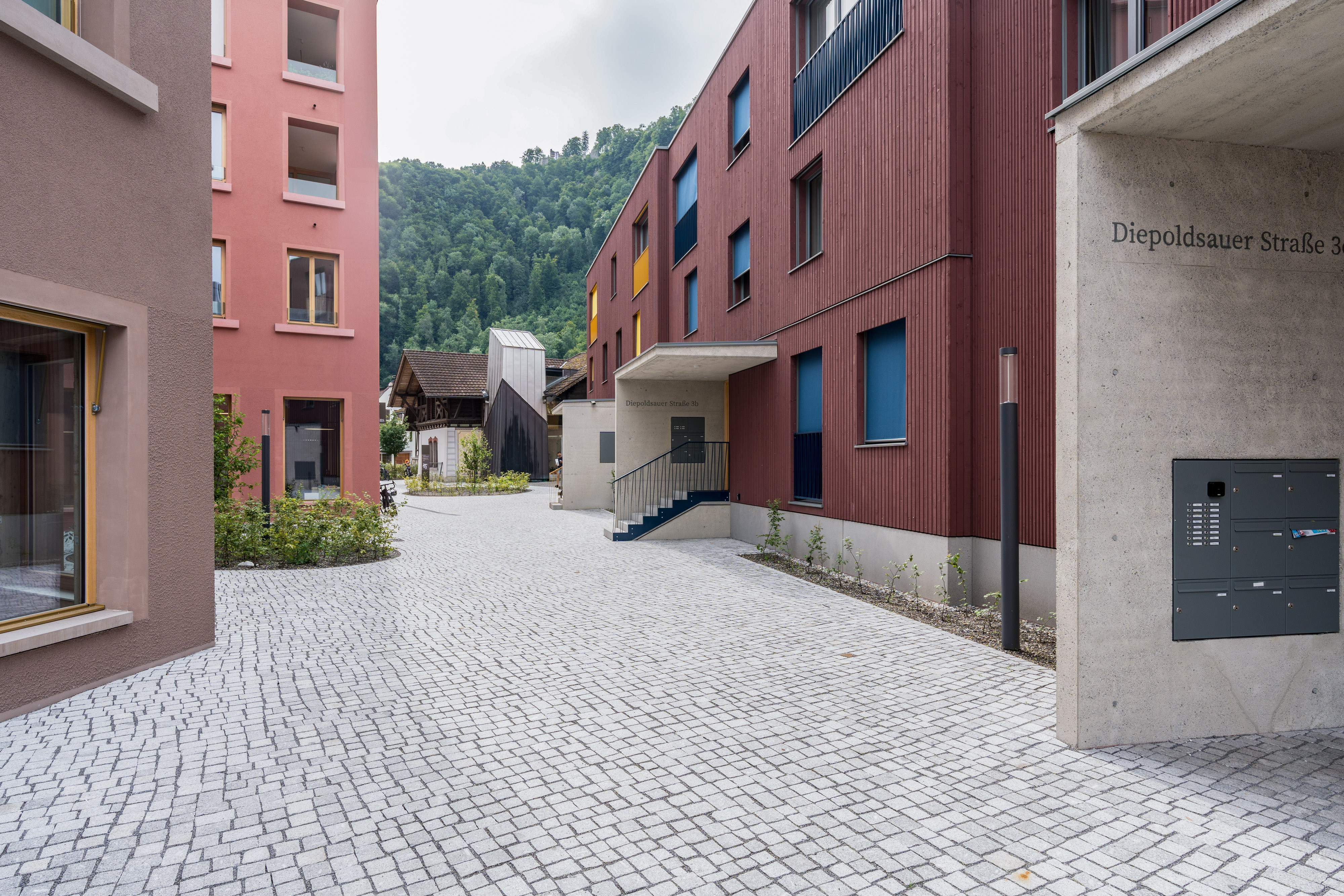
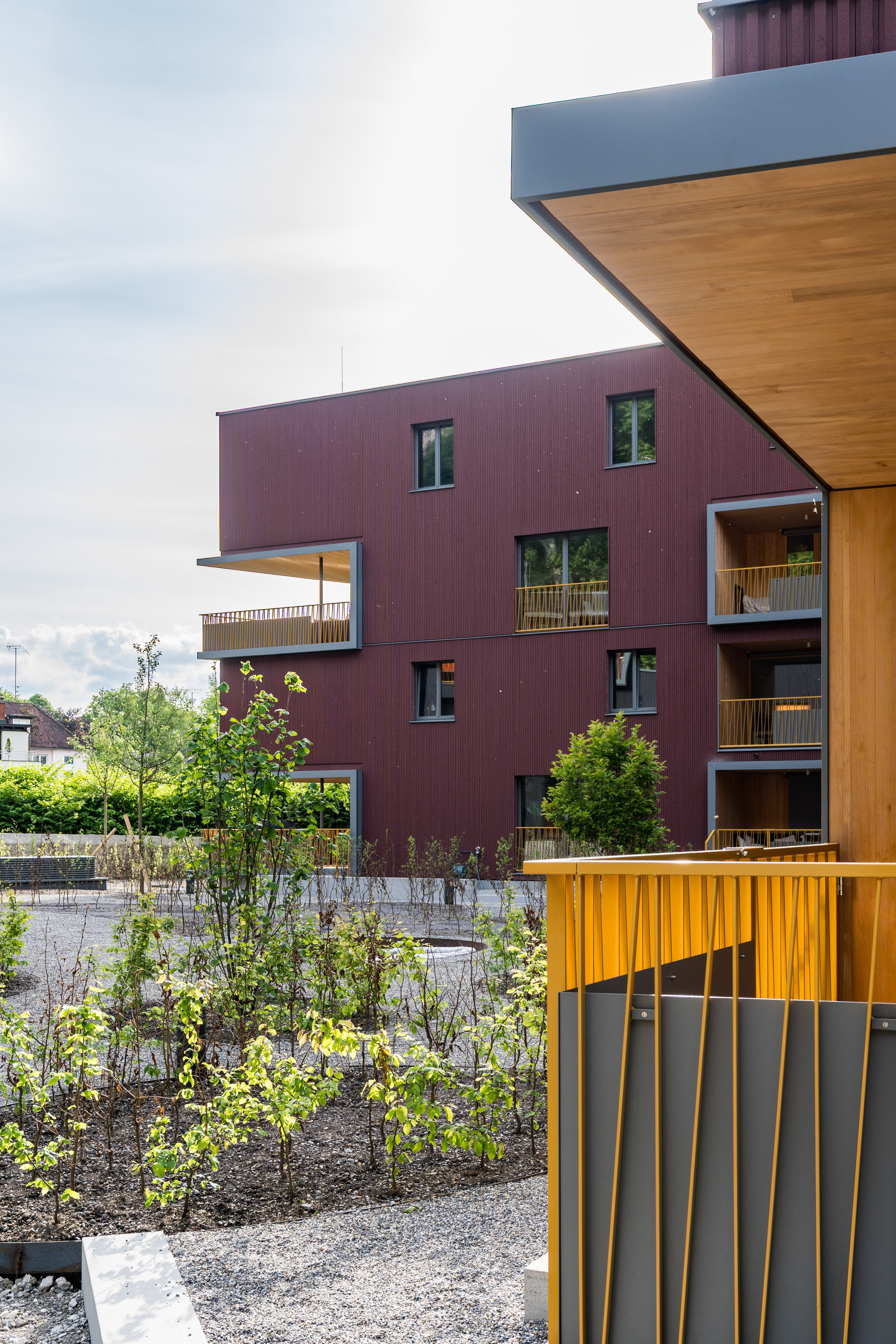
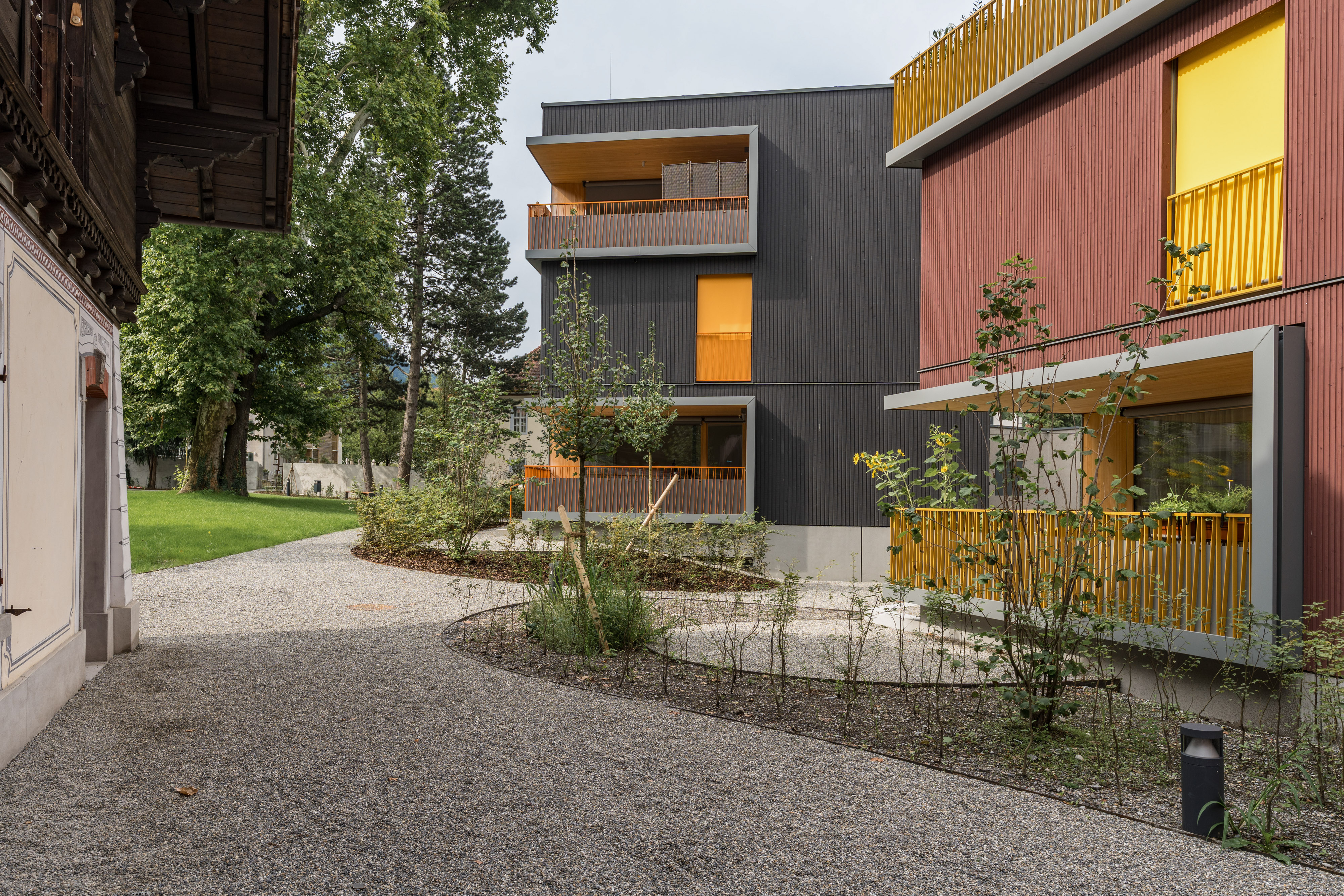
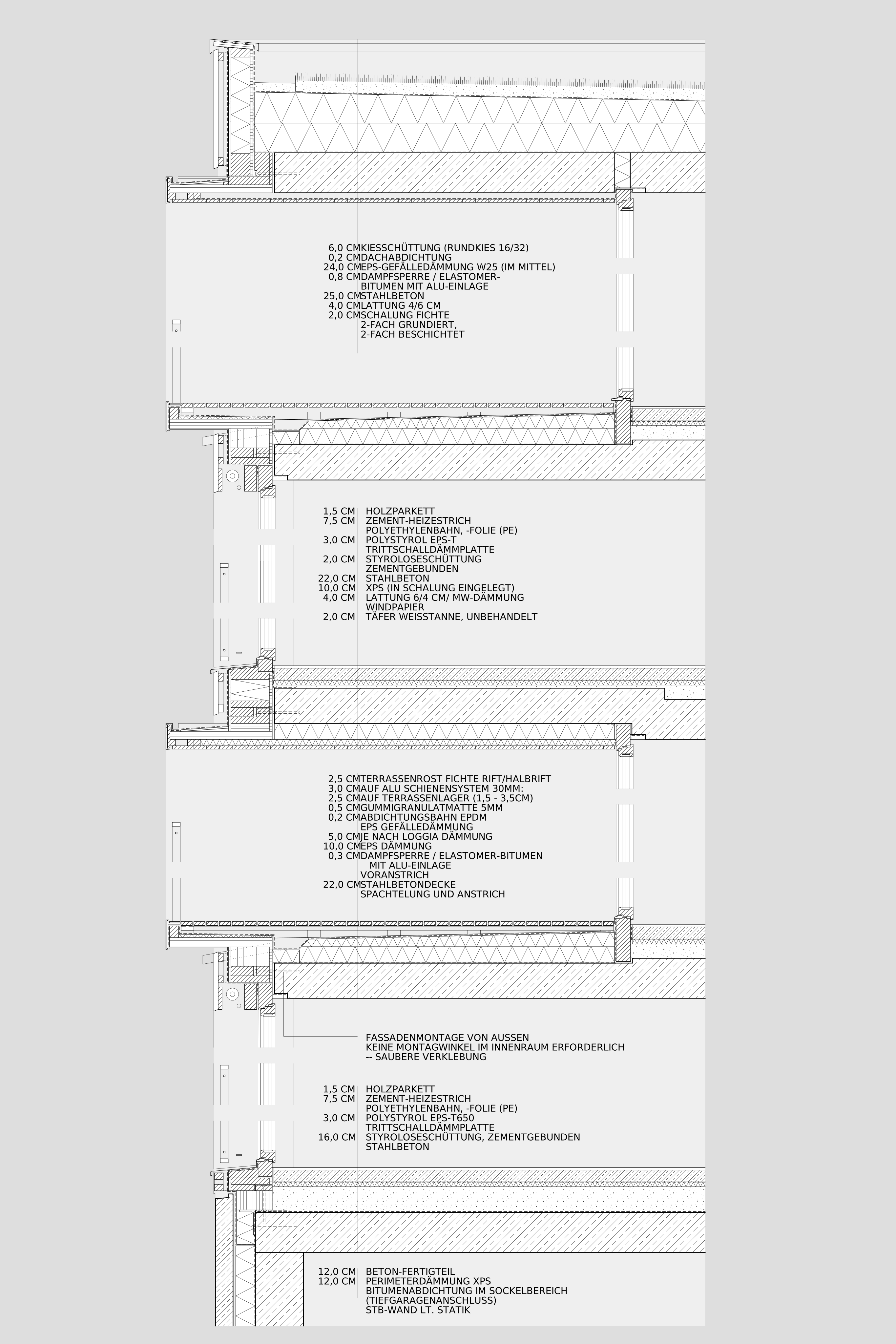
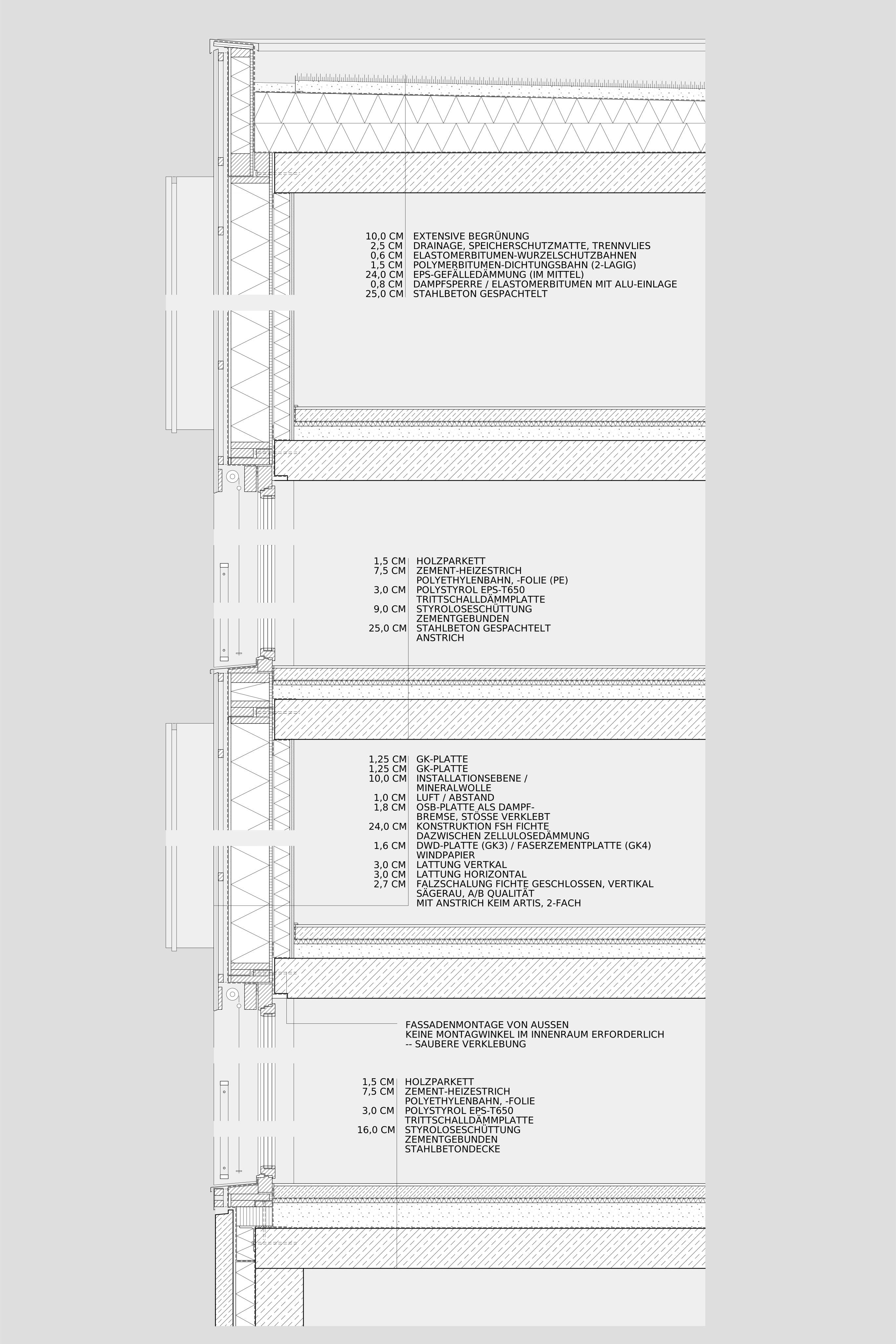
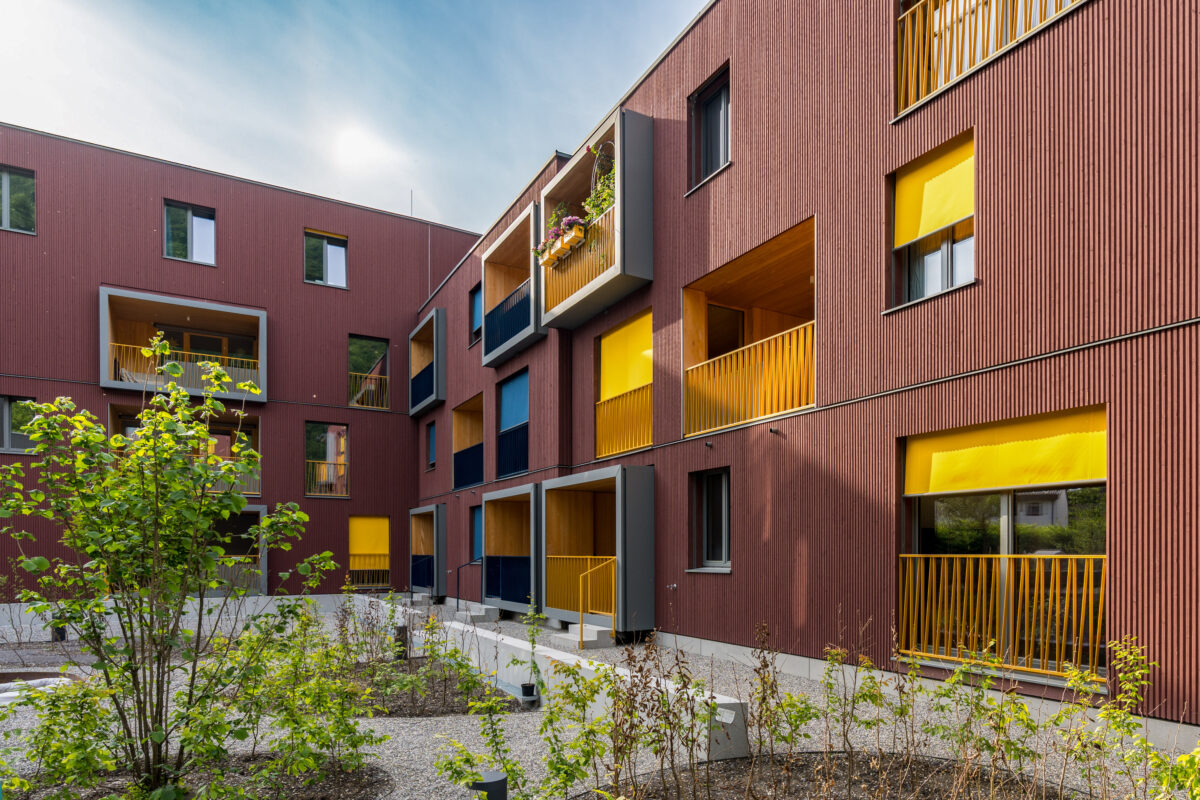
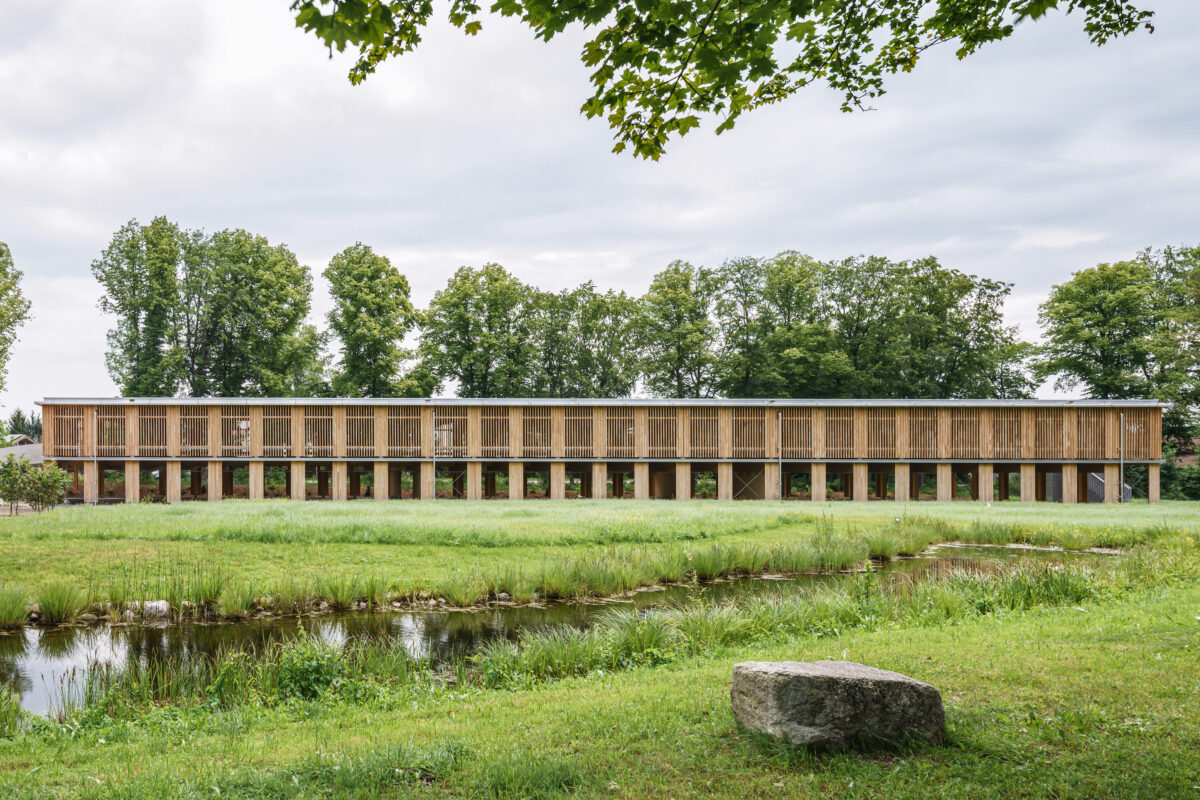
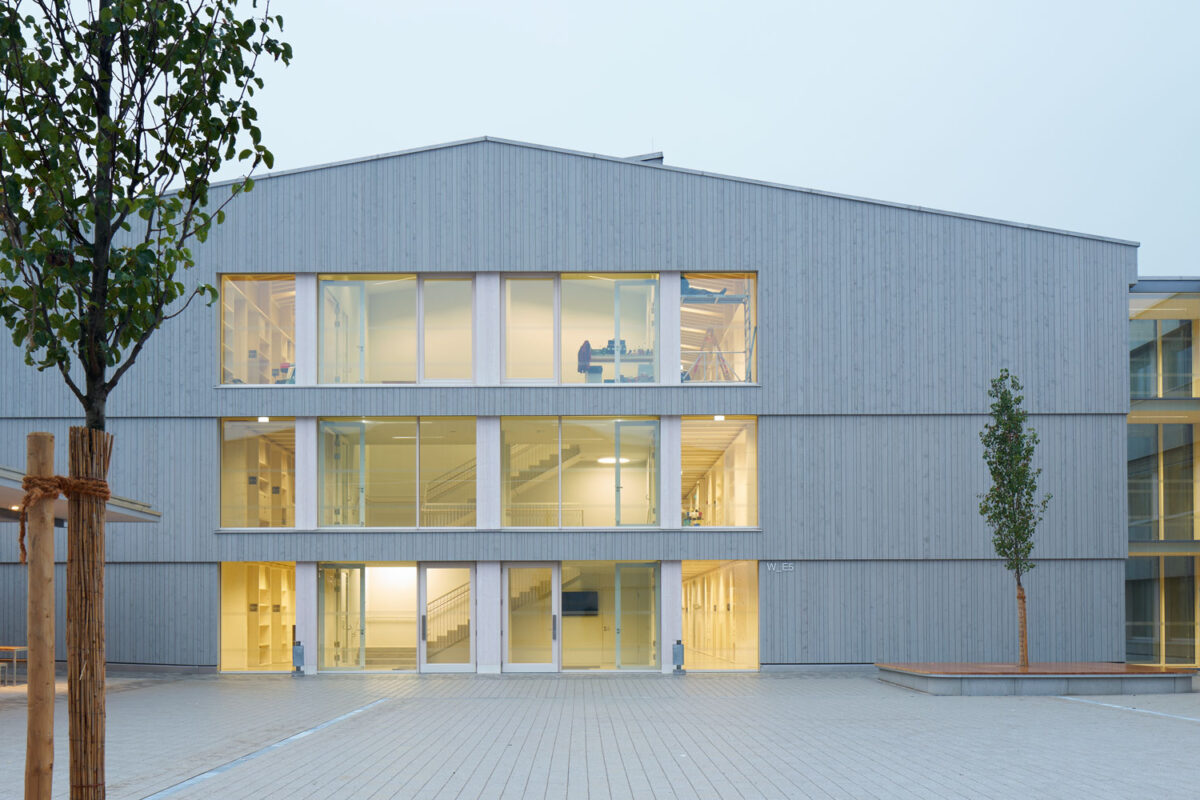
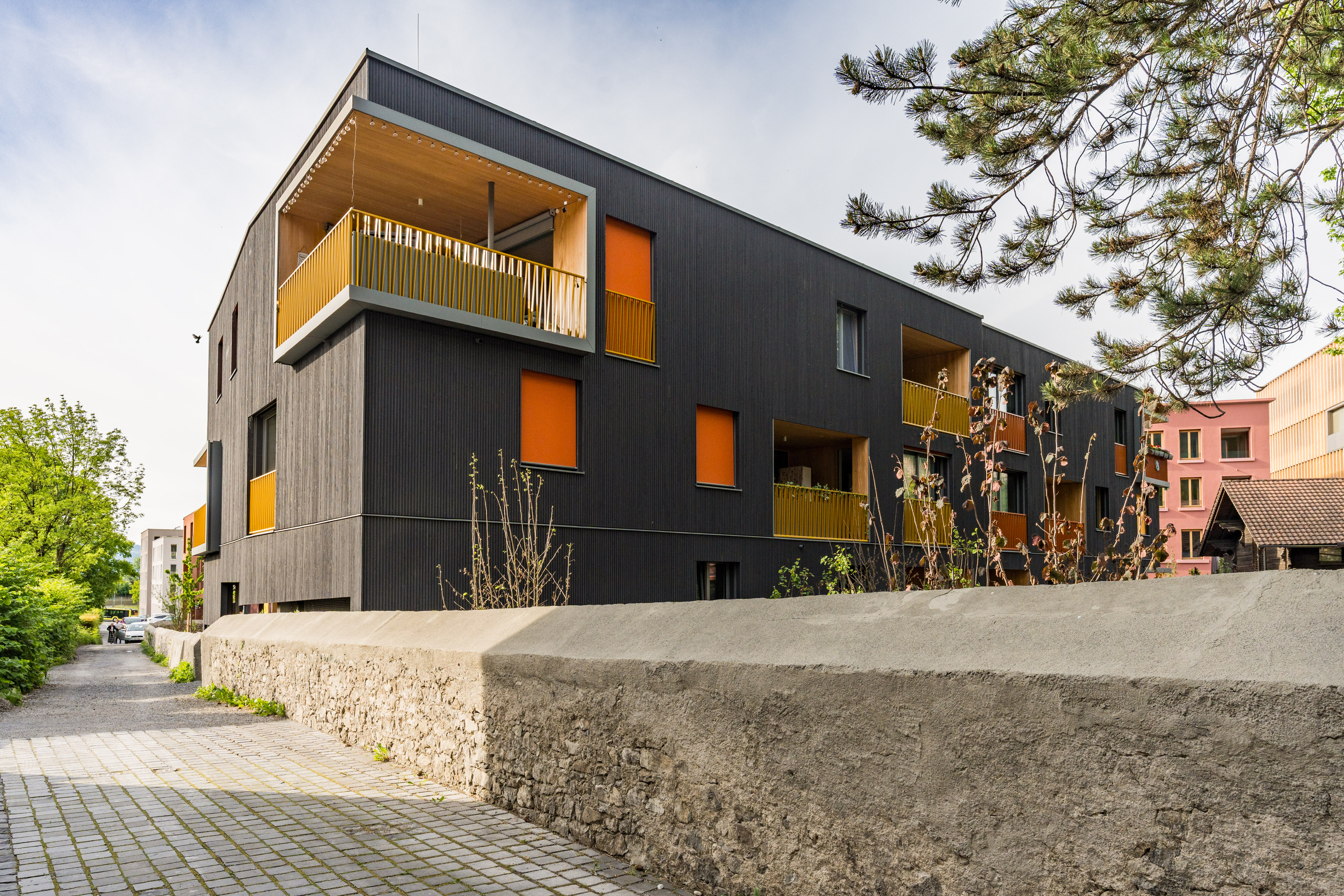
The siting of the new buildings emerged from a long-term, cooperative planning process. Local project and neighbourhood developer Markus Schadenbauer initiated it in partnership with STC Development. HK Architekten were commissioned to design and realise the courtyard-oriented residential buildings B1 and B2. Confidently integrated into the park-like open space structure, they provide a total of 35 rental apartments conceived as generously proportioned garden and maisonette units with private outdoor spaces and views into the surrounding greenery. While solid volumes characterise the street frontage, these residential buildings create a gentle transition towards the historic town centre and act as mediating structures through their scale and proportions. Both buildings are realised in hybrid construction and meet material-specific requirements while achieving high energy standards. Their finely structured timber façades articulate a contemporary interpretation of a regional building tradition within the townscape of Hohenems: as a typical urban layering, stone houses form the front row, while timber buildings occupy the rear.
These design principles are also reflected in the floor plans, with subtly interwoven maisonettes unfolding particularly on the upper levels. The terraced housing typology with direct entrances fosters a differentiated system of addresses and enhances access to the individual dwellings within the neighbourhood. All units are oriented to two sides and organised around a compact stairwell. With only nine square metres of circulation space per building, functional and economic efficiency is achieved, providing the conditions for affordable vertical living.
In close collaboration, the partner architects developed an overarching colour scheme that accentuates the black and red timber claddings through strongly contrasting façade elements. The finely crafted vertical structures of the profiled battens were finished with matte mineral paint, creating a subtle link between the tactile qualities of timber and the textures of plaster and masonry. In this way, the surfaces of the development gain a sense of vibrancy and material depth.
A sustainable approach has also been implemented in terms of energy. The complex is supplied by an environmentally friendly geothermal system as an integral component of the overall climate-conscious concept. The RathausQuartier not only establishes a new urban centre; it also forms a key component of a long-term strategy for the revitalisation and further development of Hohenems’ historic town fabric. As such, it exemplifies contextual, culturally grounded planning in the Alpine region.