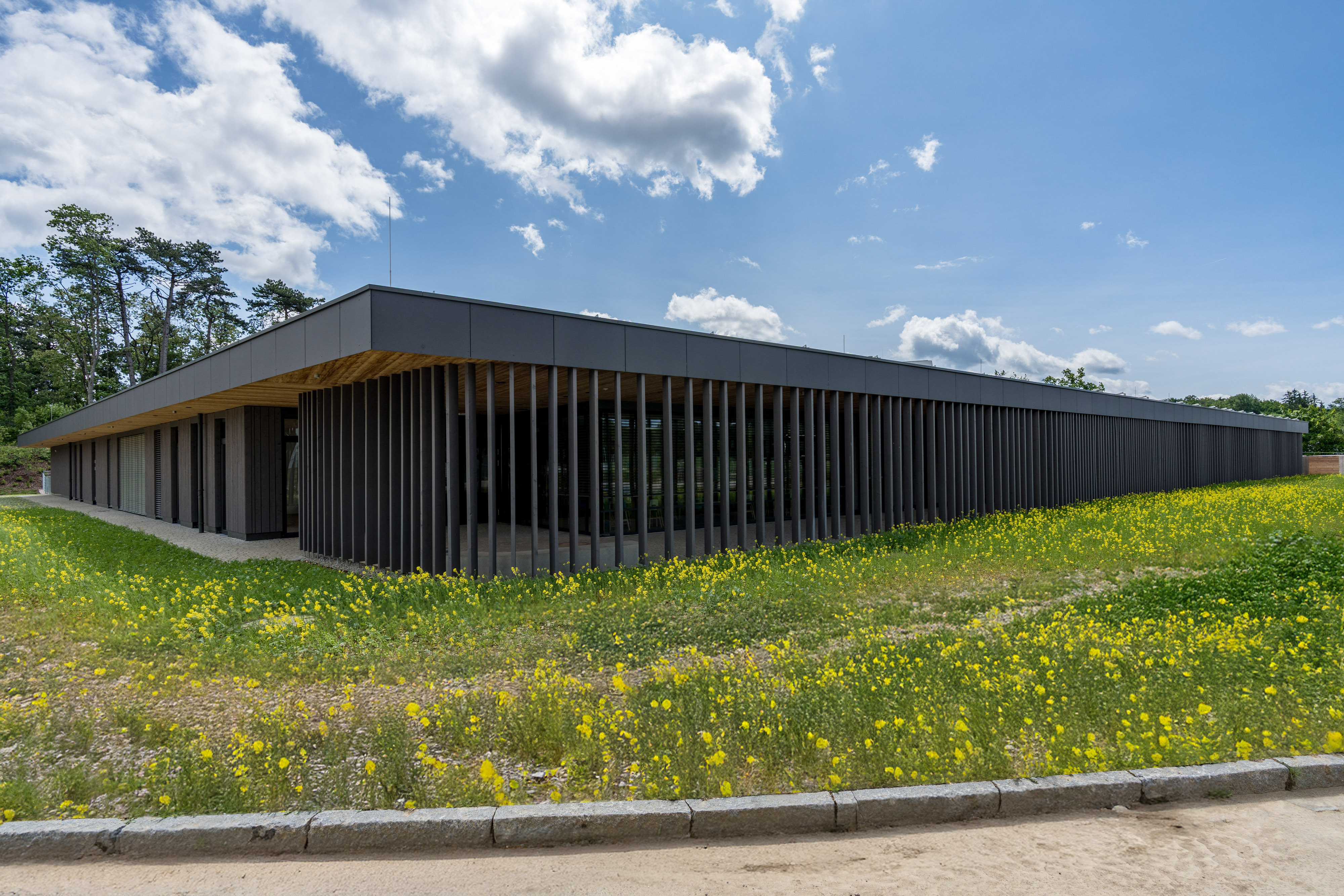
Versatile Spaces for Development
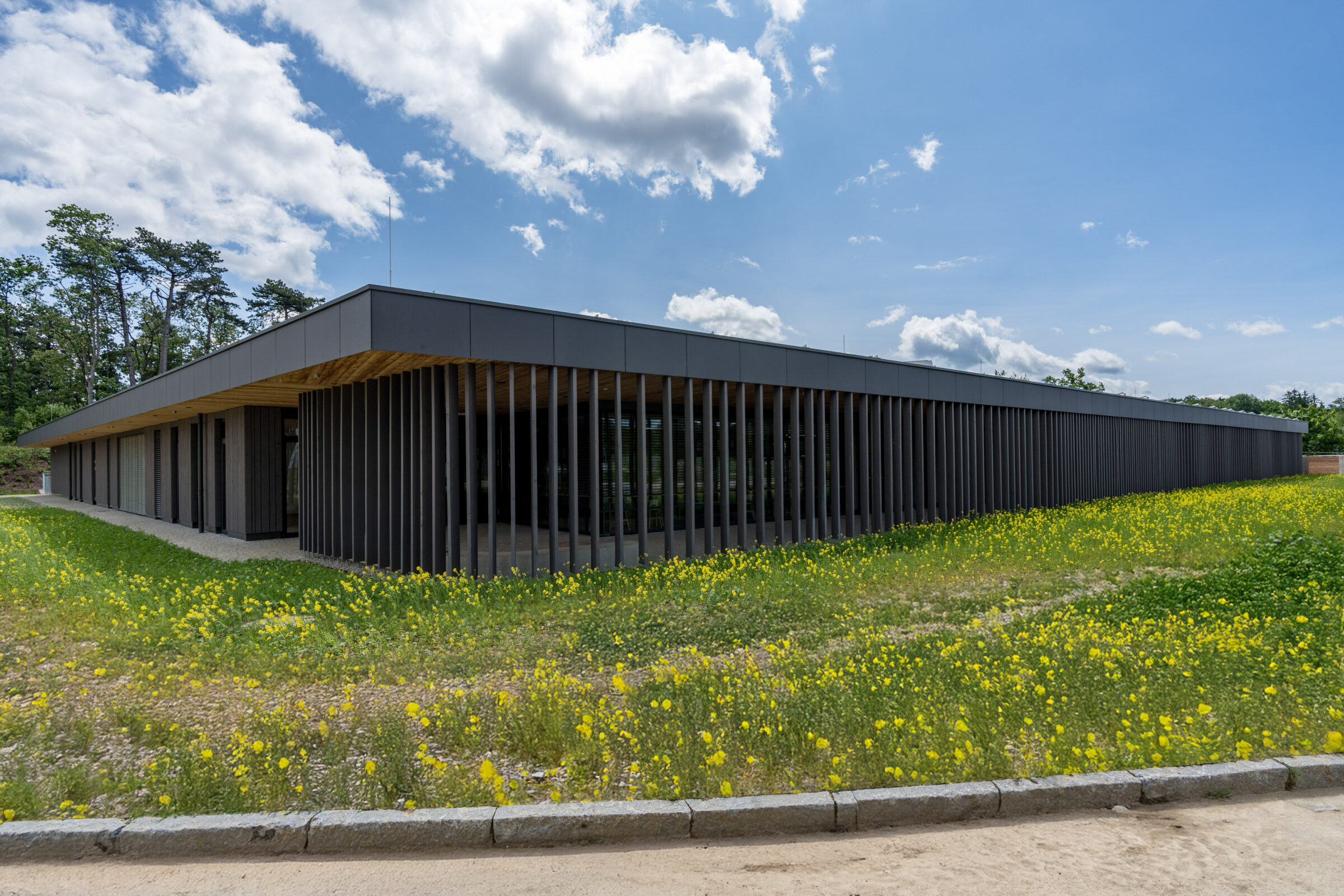
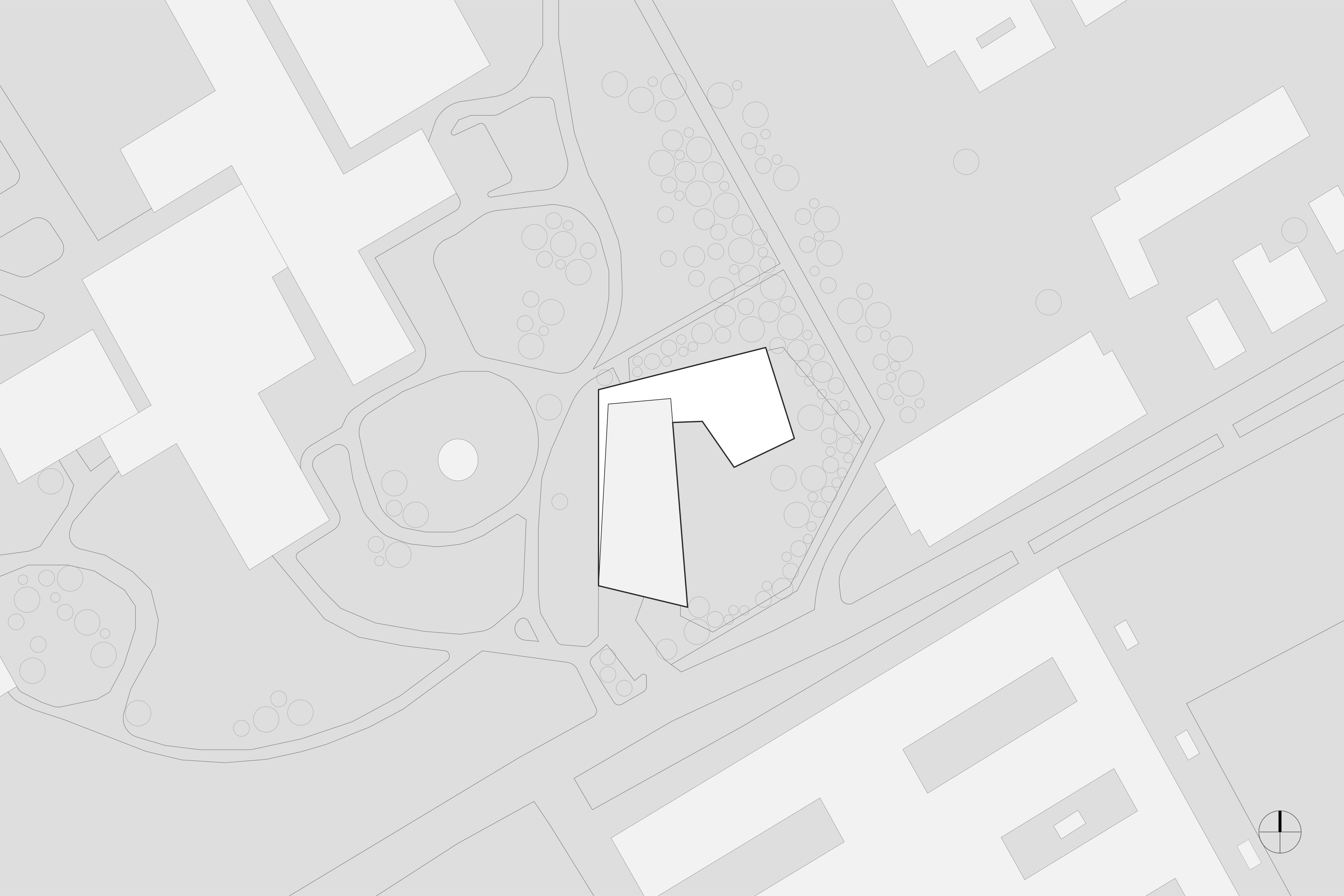
The Oberer Eselsberg medical and research facility is located in the north-west of Ulm, a historically significant city in the Swabian Danube region. Nestled within the campus of the Armed Forces Hospital lies the Villa Sanigel daycare centre. Amid the strictly orthogonal layout of the complex, the free-form design of the existing building is deliberately emphasised and spatially continued in the new addition, with its structure consequently derived from the original setting. In this way, the two volumes are interwoven organisationally and spatially to form a coherent unit that is perceived as an autonomous, distinctly defined entity.
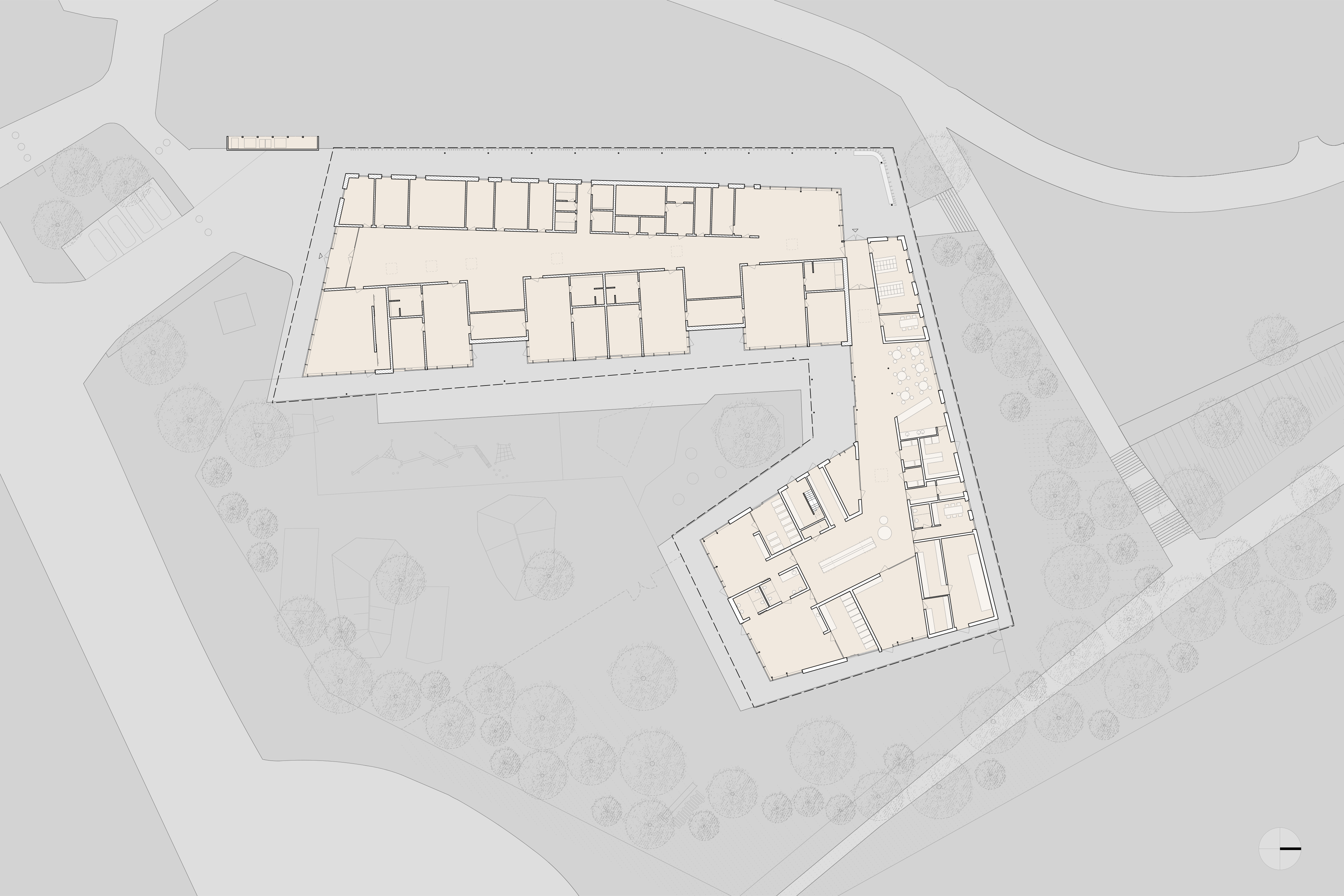
Both units are accessed via a shared forecourt to facilitate orientation and a clear sense of address. An extension to the canopy along the west façade, combined with a translucent curtain of slender timber lamellae, creates a light-filled connecting corridor. It guides visitors to the entrance of the new building, establishing visual links between interior and exterior areas. The conical geometry generates a perspectival foreshortening of the path, interlacing the reception zones not only functionally but also spatially. Here, the Vorarlberg-based media artist Miriam Prantl has realised a colourful ‘art in architecture’ installation. Her interplay of light and sound invites children and adults into an atmospheric spatial experience, where perception and movement become intricately entwined.
Read more
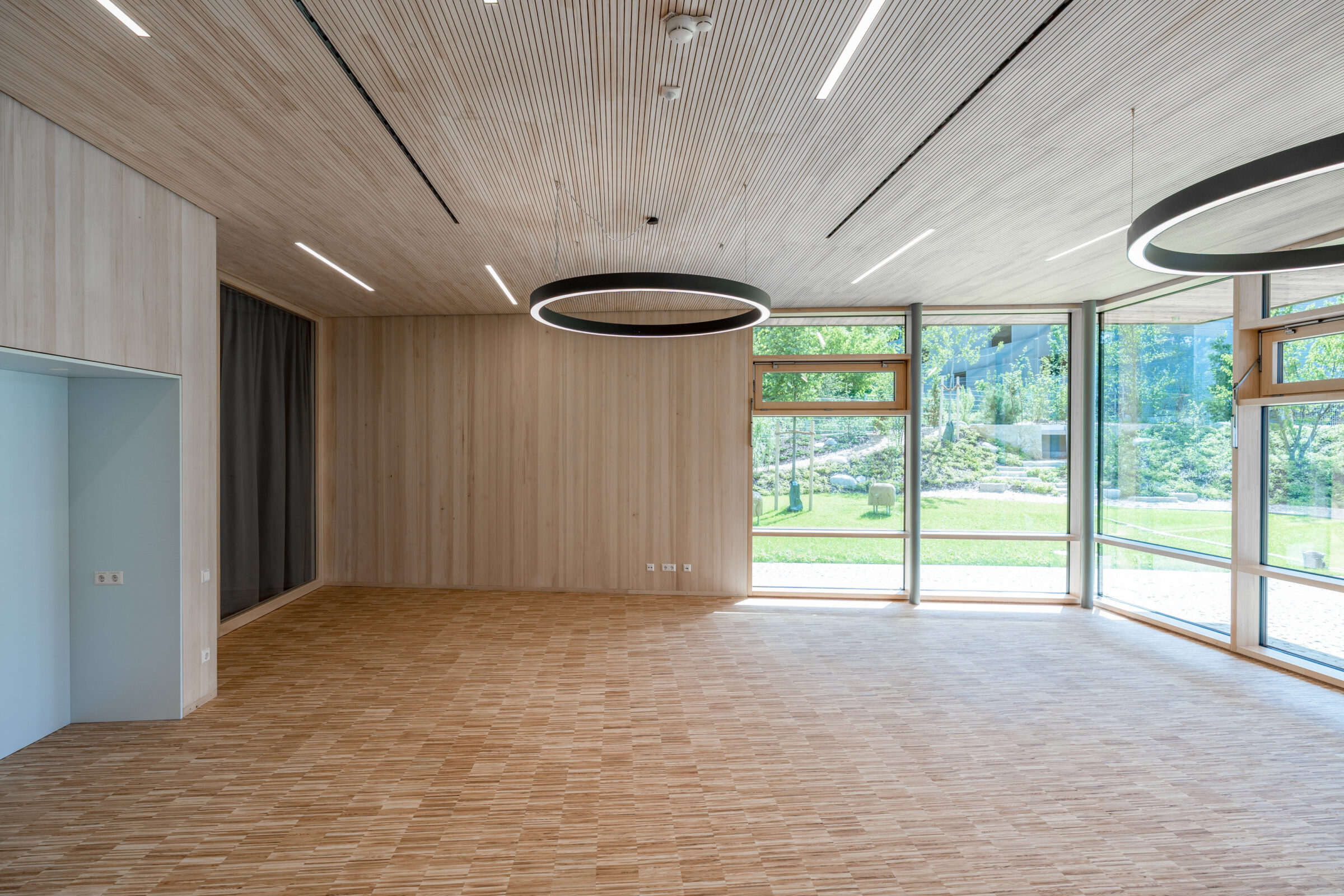
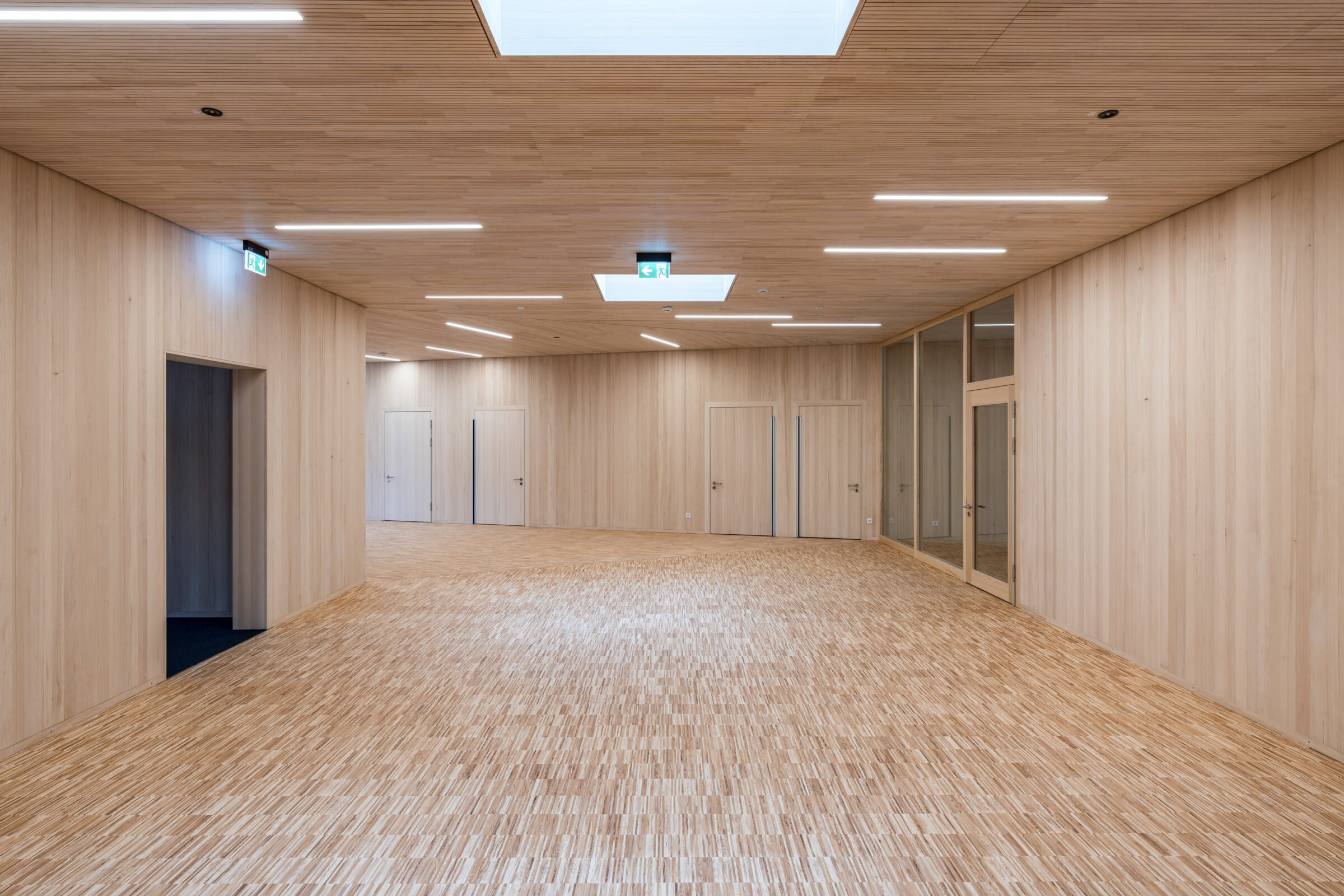
The architectural concept of the extension is founded on a small number of clearly defined principles. Adjoining the existing volume to the north, the new addition unfolds towards the south-east, creating a sheltered outdoor area between the two wings. The internal layout follows the typological logic of the original structure, translating it into a finely choreographed spatial sequence. Upon entering, the gaze is drawn along the central axis towards the multi-purpose room, which opens onto the green space beyond. The play corridor widens into a generous eating area that corresponds spatially with the communal terrace on the opposite side. From this core zone, the line of movement continues to the passage into the garden and to the south-facing group rooms, which are optimally oriented towards daylight and solar exposure.
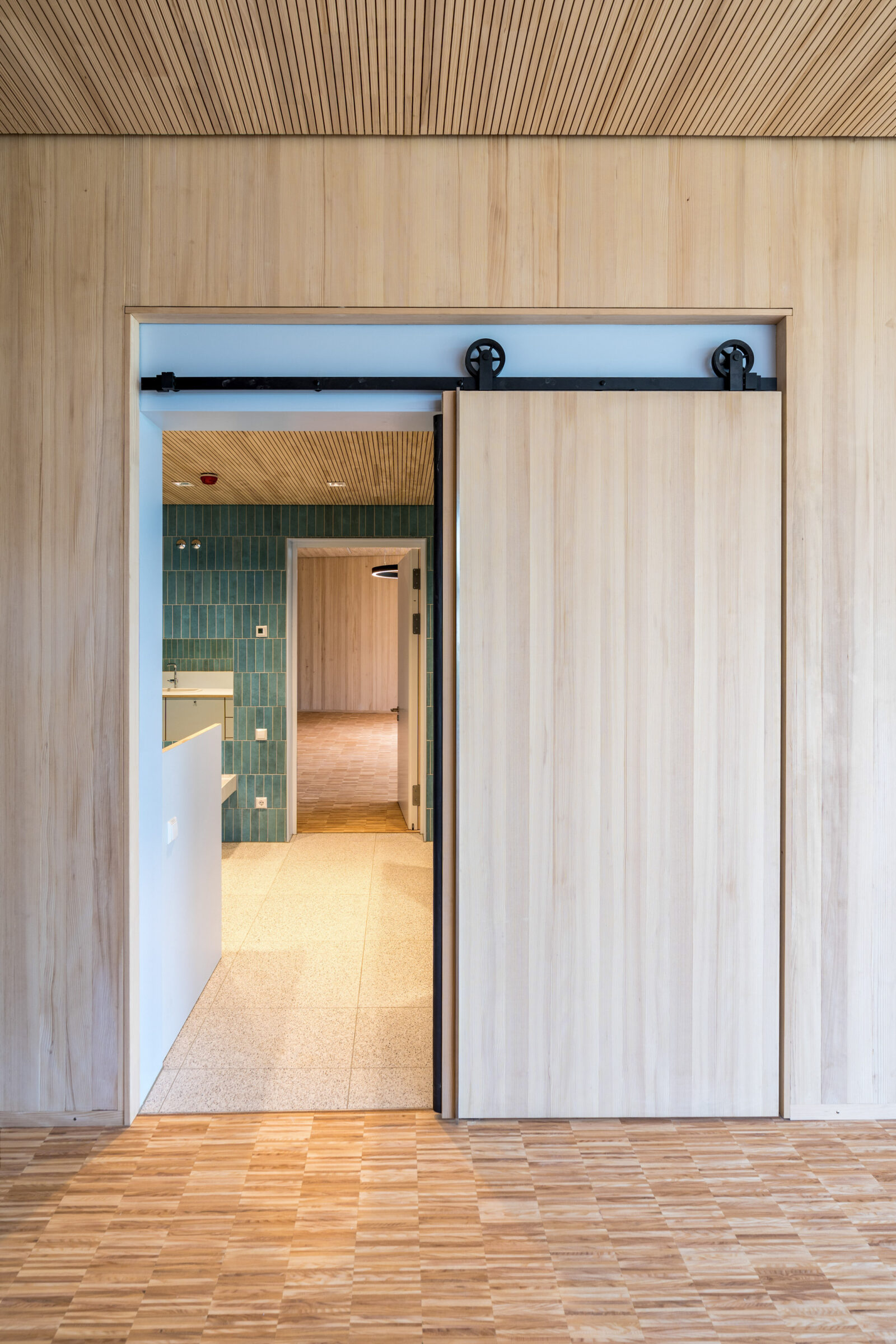
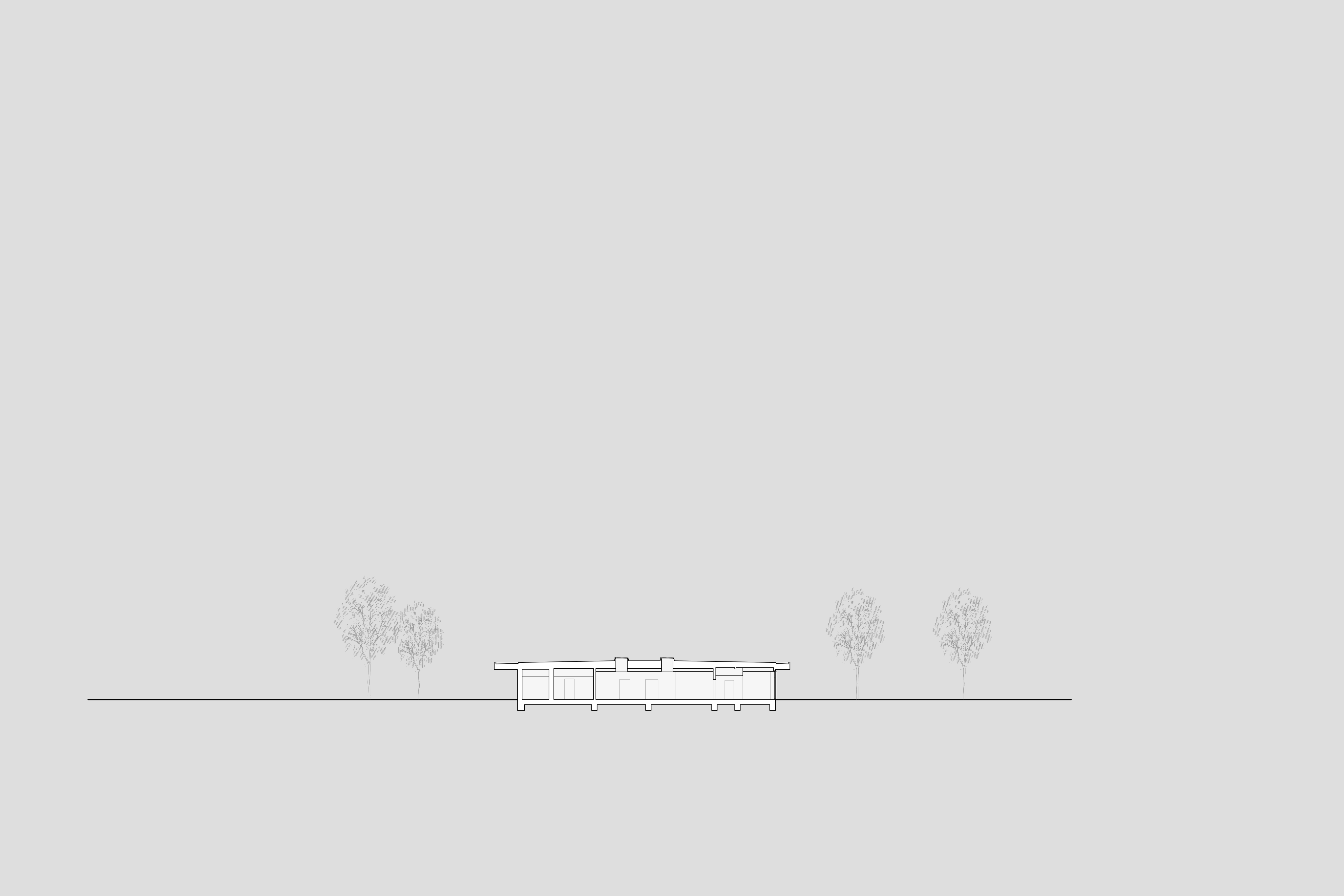
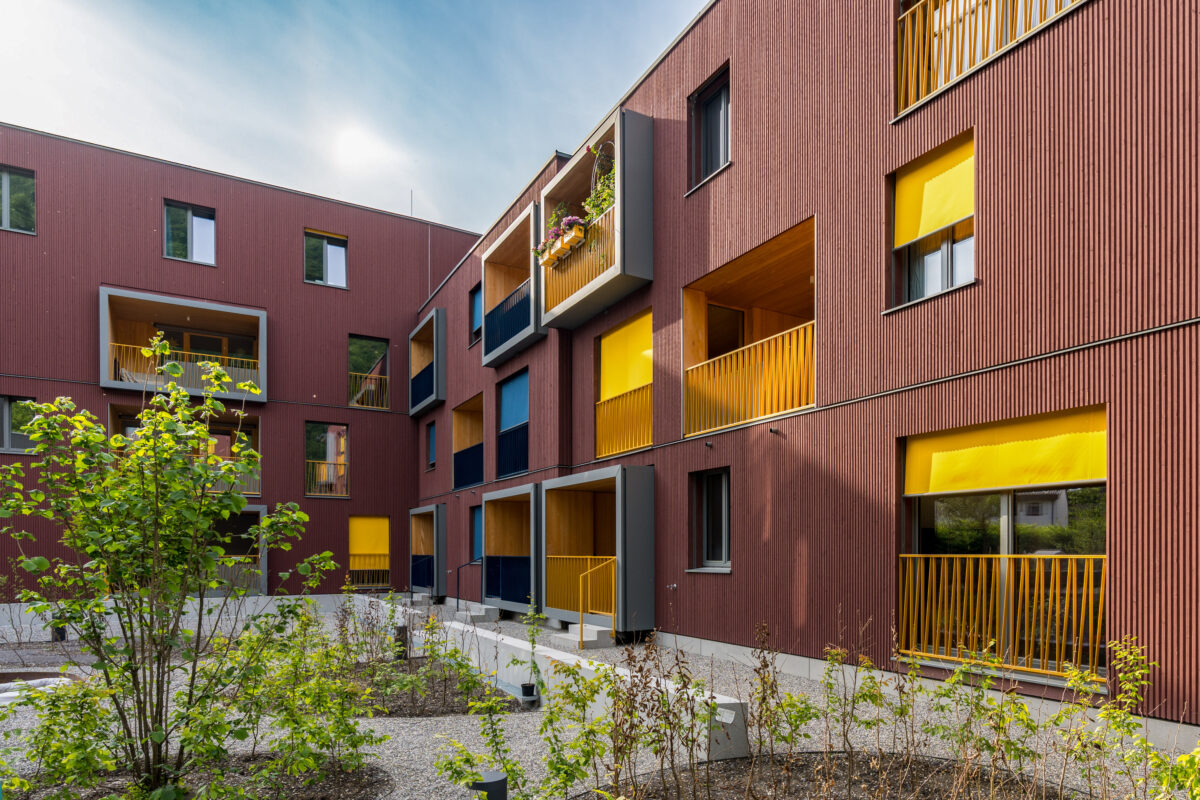
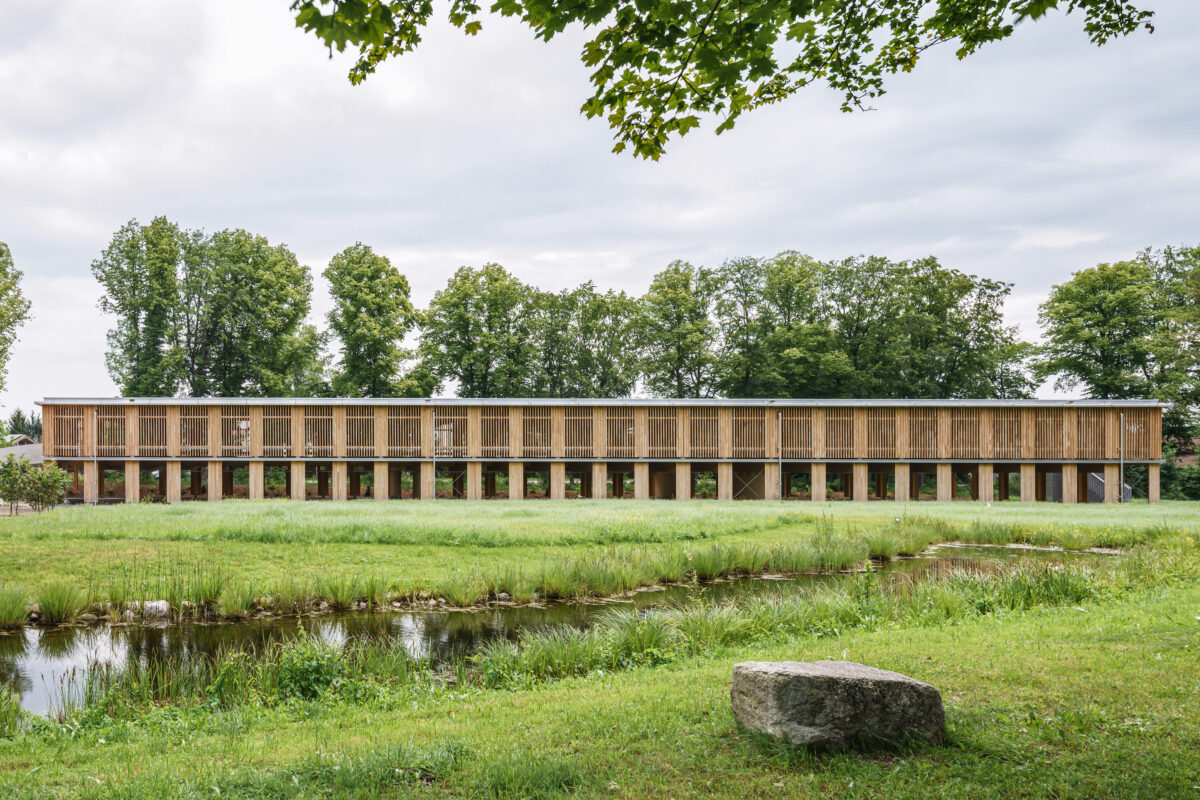
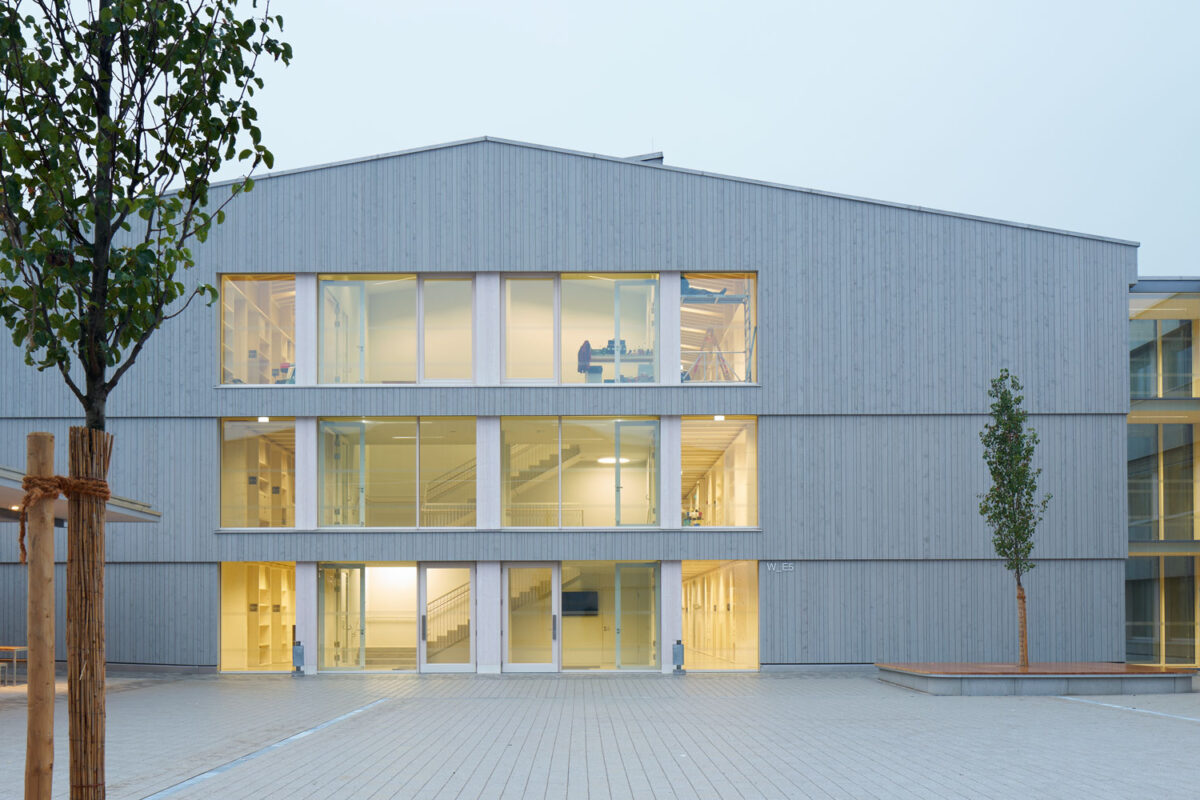
While the building is perceived as a homogeneous structure from the outside, the materials used in the new interior spaces deliberately contrast with the existing fabric. Walls, ceilings and floors are finished in warm wood surfaces, with expansive glazed elements opening onto the play corridor. In this way, the children experience a nurturing environment for learning and discovery that stimulates creative development. The consistent implementation as an all-timber construction reflects a commitment to material clarity and architectural coherence. The walls are formed from precisely manufactured timber frame elements, while the ceilings are assembled from solid cross-laminated timber panels. Extensively planted rooftops and photovoltaic installations contribute to a sustainable and ecologically responsible building strategy.